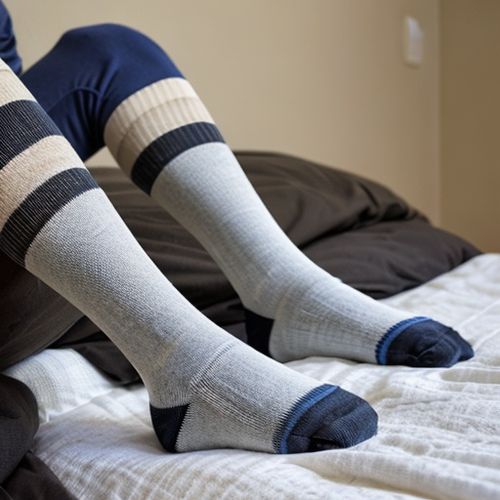
When it comes to improving sleep quality, many people turn to traditional methods like reducing screen time, creating a relaxing bedtime routine, or even trying sleep aids. However, a surprising and somewhat counterintuitive approach has been gaining attention in the world of sleep science: wearing socks to bed. According to Michelle Drerup, a behavioral sleep disorders specialist and director of the Sleep Disorders Center at Cleveland Clinic, this simple strategy could significantly enhance your chances of falling asleep faster and enjoying a deeper, more restful night’s sleep.
The Science Behind Warming Your Feet
The idea that warming your feet with socks can help you fall asleep faster may seem odd at first, but it is rooted in the science of thermoregulation. During the day, the average adult’s core body temperature ranges between 97 and 99 degrees Fahrenheit (36.1 to 37.2 degrees Celsius), with an average of 98.6 F (37 C). As night approaches, the body’s core temperature naturally begins to drop by one to two degrees, signaling the brain that it’s time to sleep. This cooling process is facilitated by a phenomenon called distal vasodilation, which involves the widening of blood vessels in the extremities, primarily the hands and feet. This increased blood flow helps dissipate heat through the skin, lowering the body’s core temperature.
Drerup explains, “By making your feet warmer, you’re opening up blood vessels to help cool down the rest of the body. So increasing the blood circulation to your feet results in a lower core temperature.” This seemingly paradoxical effect is supported by a small study published in 2018, which found that young men who slept in socks fell asleep nearly eight minutes faster and slept 32 minutes longer than those who didn’t, with fewer awakenings during the night.
Optimal Bedroom Temperature
In addition to warming your feet, sleep experts recommend maintaining a cool bedroom environment to support the body’s natural cooling process. The ideal room temperature for sleep is generally around 65 F (18.3 C), although individual preferences can vary widely, with some people preferring a cooler 60 F (15.6 C) and others a warmer 70 F (21.1 C). Keeping the bedroom cool helps align with the body’s natural drop in core temperature, making it easier to fall asleep and stay asleep.
The Warm Shower or Bath Trick
Another effective strategy for enhancing sleep quality is taking a warm (not hot) shower or bath before bed. This practice leverages the same principle of thermoregulation. Drerup explains, “If I’m slightly increasing my core body temperature a bit just before bedtime, then there’s a bigger drop as it lowers, and that potentially helps with feeling sleepy.” The rapid cooling effect after stepping out of a warm shower can signal to the body that it’s time to sleep, making it easier to drift off.
Personal Comfort and Flexibility
While these strategies are backed by scientific evidence, it’s important to recognize that individual preferences play a significant role in sleep comfort. Jennifer Mundt, a sleep specialist and associate professor of family and preventive medicine at the University of Utah, emphasizes the importance of personal comfort. “If you wear socks to bed and you feel like your feet are too hot, by all means, take your socks off,” she advises. “It’s the same idea with room temperature. People can get really hung up on the idea that the bedroom should be this exact temperature.”
Mundt encourages individuals to trust their own judgment and prioritize what feels comfortable. “Our bodies are good at telling us if we’re too warm or too cold,” she says. This flexibility is crucial because what works for one person may not work for another. For example, while some people, like Drerup, find that wearing socks to bed significantly improves their sleep quality, others, like her husband, prefer to sleep without them.
Practical Tips for Better Sleep
To maximize the benefits of these strategies, consider the following practical tips:
1. Wear Socks to Bed: Choose comfortable, breathable socks that keep your feet warm without overheating them. This can help promote distal vasodilation and lower your core body temperature.
2. Maintain a Cool Bedroom: Aim for a room temperature around 65 F (18.3 C), but adjust based on your personal comfort. Using fans or air conditioning can help maintain a cool environment.
3. Take a Warm Shower or Bath: A warm shower or bath before bed can help raise your core body temperature slightly, leading to a more significant drop as you cool down afterward.
4. Create a Comfortable Sleep Environment: Invest in comfortable bedding and pillows that support your preferred sleeping position. Ensure your bedroom is dark, quiet, and free from distractions.
5. Establish a Relaxing Bedtime Routine: Activities like reading, listening to calming music, or practicing mindfulness can help signal to your brain that it’s time to sleep.
6. Limit Screen Time: Avoid screens and blue light at least an hour before bedtime to reduce alertness and promote relaxation.
Prioritize Comfort for Better Sleep
Improving sleep quality often involves a combination of strategies tailored to individual needs and preferences. While warming your feet with socks and maintaining a cool bedroom environment are scientifically supported methods, the key is to prioritize personal comfort. By experimenting with different approaches and finding what works best for you, you can create a sleep-friendly routine that enhances your overall well-being. Remember, the goal is to create a comfortable and relaxing sleep environment that supports your body’s natural processes. So, whether you choose to wear socks to bed or sleep in a cooler room, the most important thing is to listen to your body and prioritize what feels right for you.
By James Moore/Apr 1, 2025

By Emily Johnson/Apr 1, 2025

By Emma Thompson/Apr 1, 2025

By Rebecca Stewart/Apr 1, 2025

By Natalie Campbell/Apr 1, 2025

By James Moore/Apr 1, 2025

By Noah Bell/Apr 1, 2025

By Laura Wilson/Apr 1, 2025

By William Miller/Apr 1, 2025

By Benjamin Evans/Apr 1, 2025

By Emily Johnson/Mar 29, 2025

By Olivia Reed/Mar 29, 2025

By Benjamin Evans/Mar 29, 2025

By Jessica Lee/Mar 29, 2025

By Benjamin Evans/Mar 29, 2025

By Noah Bell/Mar 29, 2025

By Emily Johnson/Mar 29, 2025

By Grace Cox/Mar 29, 2025

By Megan Clark/Mar 29, 2025

By Sophia Lewis/Mar 29, 2025